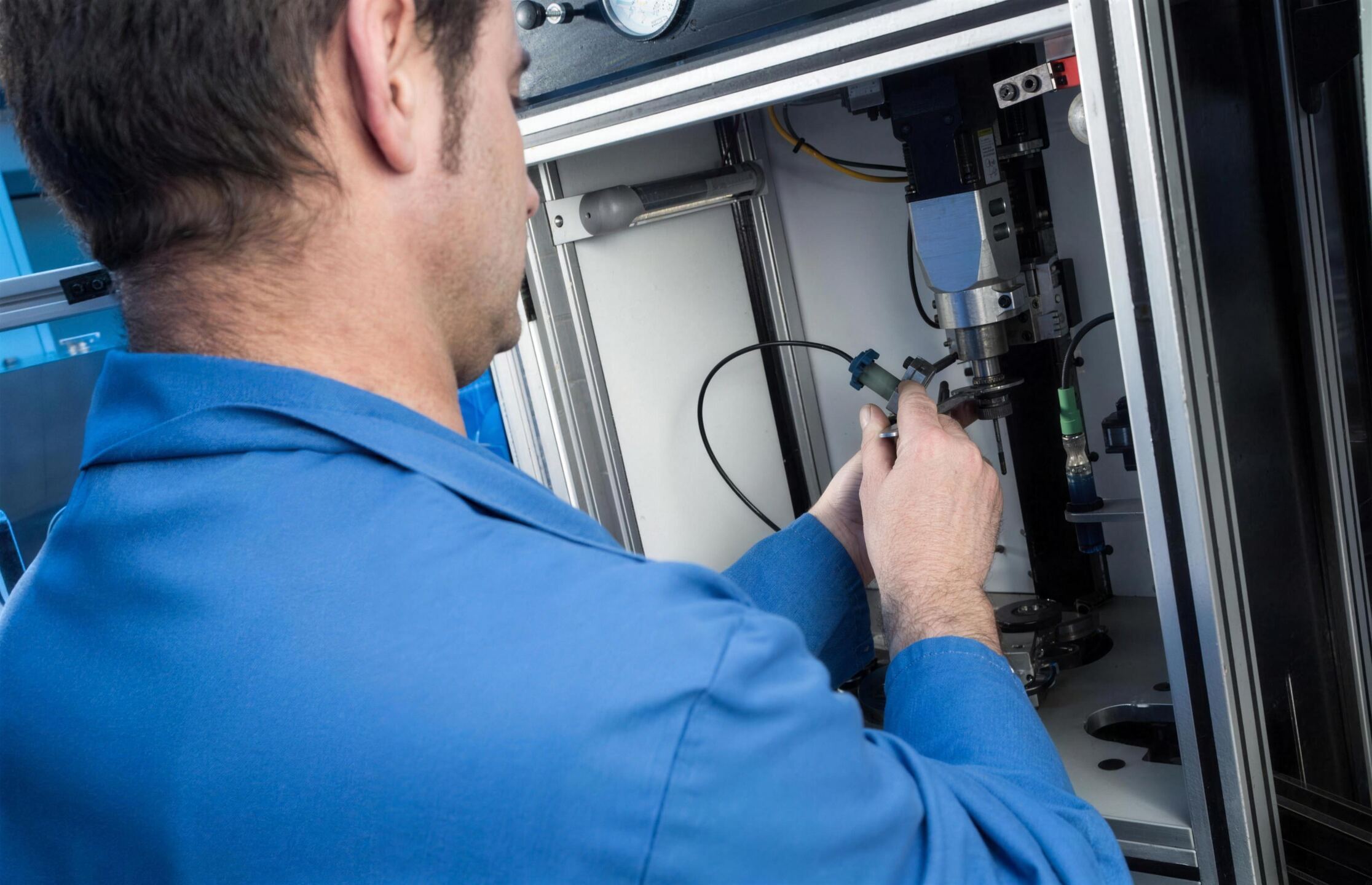
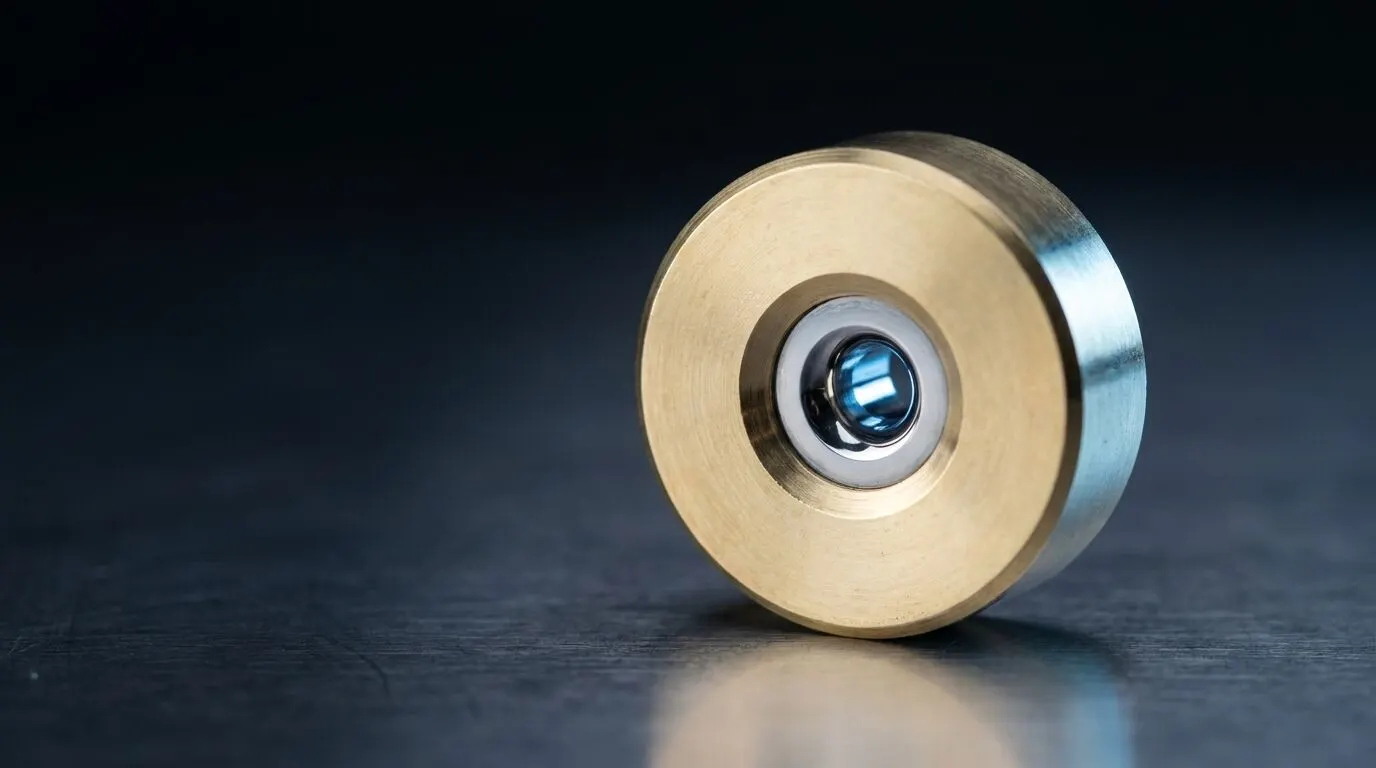
Carbide drawing dies for bars and tubes (German: Ziehmatrizen) reduce bar stock or tube to its finished cross-section: the material is pulled through the profiled bore of a tungsten carbide core seated in a die case. Fritz Leng supplies these dies in all common core and case dimensions, up to a die case of Ø 450 mm, made to order with the geometry matched to your drawing process.
What is a bar and tube drawing die?
A bar and tube drawing die is the outer tool in cold drawing: the stock is pulled through the die, the pulling force acts on the exit side, and the actual forming is done by the pressure of the die wall. German standard DIN 8584 classifies this drawing process as combined tensile and compressive forming.
For wire, the same principle is applied by our tungsten carbide wire drawing dies. Bar and tube drawing dies do the same job at much larger dimensions, which is why core and case sizes reach well beyond the wire range. The internal profile follows the same logic in both tool families: entrance, reduction cone and bearing length together determine size accuracy and surface quality. The interplay of these zones is explained in our article on drawing die geometry.
Which tube drawing processes do these dies serve?
These tools are used to produce bars and tubes. For cold drawing of tubes, published steel-tube literature (among others Wirtschaftsvereinigung Stahlrohre, "Herstellverfahren") distinguishes three basic methods:
| Process | Internal tool | Effect |
|---|---|---|
| Tube sinking | none | Outer and inner diameter are reduced, wall thickness stays roughly constant |
| Plug drawing | fixed or floating plug | Wall thickness and diameter are reduced, the inner surface is smoothed; cross-section reduction up to about 45 % per pass |
| Rod drawing | inserted mandrel bar | Outer diameter and wall thickness are reduced; close tolerances, both surfaces smoothed |
In every method the drawing die forms the outer contour. In plug and rod drawing it works together with an internal tool. We also make the matching internal tools: fixed carbide mandrels and plugs for tube diameters from 2.5 to 200 mm, so die and mandrel arrive matched to each other from one workshop.
What sizes do we supply?
We supply bar and tube drawing dies in all common core and case dimensions, up to die cases of Ø 450 mm. This covers large bar and tube cross-sections that are far outside the range of standard wire dies. Our machinery grinds bores from 0.2 to 150 mm on internal cylindrical grinding machines; every bore is polished afterwards.
Each die is made to order, to your specification or to your drawing, and matched to the drawn material, the dimensions and the reduction per pass. Every tool receives permanent marking by needle engraving or laser, so it stays clearly identifiable in your drawing schedule and for reordering. For geometries outside the standard program we make custom carbide tooling to customer drawings.
What determines the service life of a drawing die?
A very high surface finish and a geometry matched to the drawing process give the die its maximum service life. Neither happens by accident. Our calculation software assists in working out drawing schedules and in determining the optimal tool geometry, for example when you change the drawn material or the reduction per pass.
After internal grinding, the bore is polished; the final finish is still produced largely by hand polishing with diamond pastes. Modern measuring equipment checks every bore, and on request we include a measuring report with the delivery: documented quality to ISO 9001:2015. How drawing angle, bearing length and the delta factor affect die life is covered in our article on drawing die geometry.
How does an inquiry work?
Since 1948 we have made nothing but drawing tools for wire, bar and tube production, to order, in Herborn-Schönbach, Germany. The process is straightforward:
Inquiry:
You state the drawn material, dimensions and reduction, or send your drawing (PDF, DXF, STEP). English inquiries are welcome.
Design:
We work out geometry and drawing schedule with our calculation software and 3D CAD.
Manufacturing:
Internal grinding, polishing, permanent marking by needle engraving or laser.
Inspection and delivery:
Measuring report on request. A large stock of raw material keeps delivery times short, within 24 hours if necessary.
[CTA:rfq] Request a quote
Reconditioning and accessories
Worn tools do not have to be replaced: our reconditioning service for carbide drawing dies regrinds them to the next possible size, giving you a tool in as-new condition at a fraction of the cost of a new one.
For polishing and reworking large bores, diamond suspensions in grit sizes from 3 to 45 µm and electroplated diamond grinding pins are available from stock; details are on our accessories page. They are the same polishing supplies we use in our own workshop every day.